


What Devon Hotels Need to Know About Fire Regulations
🧯 1. The Legal Framework for Fire Safety in UK Hotels
Regulatory Reform (Fire Safety) Order 2005
In England and Wales (and similar fire safety legislation in Scotland and Northern Ireland), the Regulatory Reform (Fire Safety) Order 2005 (FSO) is the key law that applies to hotels and all commercial premises where people sleep. It:
Places duties on the “Responsible Person” (typically the owner or operator) to ensure fire safety.
Requires a suitable and sufficient fire risk assessment of the premises.
Demands measures to reduce risk and protect occupants if a fire occurs.
Makes failure to comply a criminal offence with serious penalties (large fines and potential prosecution).
Under the Order, every paying-guest hotel, B&B or guest house must treat fire safety as an ongoing legal responsibility — not a one-off checklist item.

🔍 2. Fire Risk Assessment — The Foundation of Compliance
A fire risk assessment must be conducted and regularly reviewed. It involves:
Identifying fire hazards (e.g., kitchens, electrical systems, smoking risks).
Evaluating who could be harmed — especially sleeping guests, staff, and visitors.
Assessing the adequacy of existing fire precautions.
Recording significant findings and corrective actions.
Updating the assessment when anything changes (layout, use, construction, occupancy).
For small in Exeter hotels, the assessment can sometimes be done in-house if competent; for larger or more complex buildings, professionals are usually recommended.
🚨 3. Fire Detection and Alarm Systems
UK fire safety guidance and British Standards require fire detection systems appropriate to the size and risk profile of the hotel:
Key points:
Systems must meet British Standard BS 5839-1 (commercial fire alarm systems).
Hotels generally need automatic detection throughout guest areas and escape routes.
Fire alarms must be audible in all bedrooms and public spaces, loud enough to wake sleeping guests.
Weekly tests by staff and routine professional servicing are required.
A system’s category (e.g. L2, L1) will typically be defined in the fire risk assessment based on complexity and size.
🚪 4. Means of Escape and Fire Doors
Effective escape routes are a legal requirement:
All escape corridors and stairways must be protected and free from obstructions.
Fire-resisting doors — especially to bedrooms and stair enclosures — must be installed and self-closing.
Fire doors should be maintained and never wedged open (this undermines their purpose).
Emergency lighting is required in all escape routes to ensure safe evacuation during power failure or smoke.
Fire doors are usually rated FD30 (30 minutes fire resistance) with appropriate intumescent seals and closers.
🔦 5. Signage and Emergency Information
Clear and compliant signage is essential under the Health and Safety (Safety Signs and Signals) Regulations 1996:
Escape route signs, fire action notices, and fire door signage must be visible and understandable.
Fire action notices should be displayed in bedrooms and public areas with clear instructions on what to do in a fire.
Signs must comply with pictogram standards so they’re recognised by guests of different languages.
🧑🚒 6. Staff Training & Fire Procedures
Hotels in Devon must ensure staff are trained in fire safety, including:
Having procedures to raise alarms and evacuate safely.
Familiarity with escape points, fire equipment locations, and their roles in an evacuation.
Training on fire drills — ideally including both daytime and night-time scenarios.
Staff training is not optional — it’s part of the Responsible Person’s duties under the FSO.
🧰 7. Firefighting Equipment & Maintenance
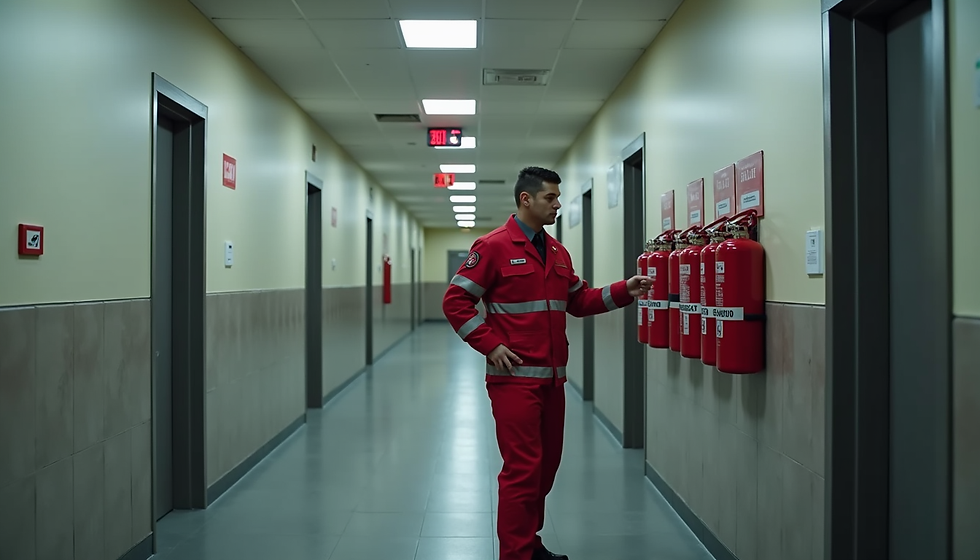
While fire extinguishers in guest areas aren’t always mandatory, the risk assessment will determine what is required:
Fire extinguishers in corridors and kitchens.
Fire blankets in cooking areas.
Routine service and maintenance of all equipment.
A logbook of tests, inspections, and maintenance records.
⚖️ 8. Record-Keeping & Legal Risks
Under UK fire law:
The fire risk assessment’s significant findings must be recorded if you have five or more employees.
Records of alarm tests, maintenance, and staff training help demonstrate compliance.
Non-compliance can result in enforcement notices, fines — potentially unlimited — and criminal prosecution.
📝 Summary — Best Practice Checklist
✔ Carry out a suitable and sufficient fire risk assessment✔ Install compliant fire detection & alarm systems (BS 5839-1)✔ Ensure fire doors and escape routes are up to standard✔ Provide emergency lighting and compliant signage✔ Train staff regularly and document drills✔ Maintain and test systems frequently✔ Keep records of assessments, tests, and training.


Comments